Art Deco vs Modern Home Bar Styles UK: Which Look Should You Choose?
Creating a home bar is about more than just collecting bottles—it's about setting a mood and establishing a space that reflects your taste. If you're caught between the glamorous geometry of Art Deco and the clean minimalism of contemporary design, you're facing one of the most rewarding decisions in bar décor. Both styles work brilliantly in UK homes, but they demand different approaches to furniture, glassware, and accessories.
Art Deco: Glamour and Geometric Drama
Art Deco bar design draws from the 1920s and 30s, and it's unmistakably theatrical. This style thrives on rich materials, bold geometric patterns, and a sense of opulent restraint—think sunburst mirrors, chevron inlays, and chrome or brass accents.
The Furniture
Art Deco bars typically feature statement cabinetry with veneered wood in walnut, ebony, or rosewood. Look for pieces with stepped edges, curved corners, and inlaid mother-of-pearl or exotic veneers. A tall cocktail cabinet with mirrored interior and brass handles will anchor your space immediately. The scale of Art Deco pieces matters; they're designed to be noticed, so they work better in larger rooms or dedicated bar spaces rather than awkward corners.
Glassware and Accessories
Art Deco glassware is characterized by stepped, geometric forms—think of Nick and Nora glasses with subtle faceting, or coupe glasses with sharp linear etching. Vintage Moser or Baccarat pieces are prized but pricey; contemporary makers now offer excellent replicas. Accessory-wise, you'll want a marble or brass jigger, a Bakelite or lacquered bar spoon, and perhaps a stunning Art Deco ice bucket with brass handles. Mirrors are non-negotiable—a large sunburst or geometric wall mirror makes the space feel deeper and reflects spirit bottles beautifully.
Pros and Cons
The upside of Art Deco is immediate impact. Your bar becomes a focal point. The style photographs well and feels distinctly premium. The downside? It can feel dated if you're not confident about commitment, and the geometric pieces tend to show fingerprints and dust more visibly than contemporary designs. Quality vintage pieces are expensive, though reproductions have improved significantly.
Modern: Minimalism and Clean Lines
Modern bar design strips back to essentials—functional beauty without unnecessary ornamentation. This is about natural materials, neutral tones, smart storage, and a sense of calm purposefulness.
The Furniture
Modern bars often use natural wood—oak, walnut, or light ash—or white lacquer, with minimal decorative detail. Straight lines dominate. Think of a sleek bar cart with stainless steel handles, or a low-profile cabinet with integrated wine storage and hidden glassware racks. The emphasis is on proportion and usability rather than visual drama. Scandinavian or Japanese minimalism influences much contemporary UK bar design, valuing both form and function equally.
Glassware and Accessories
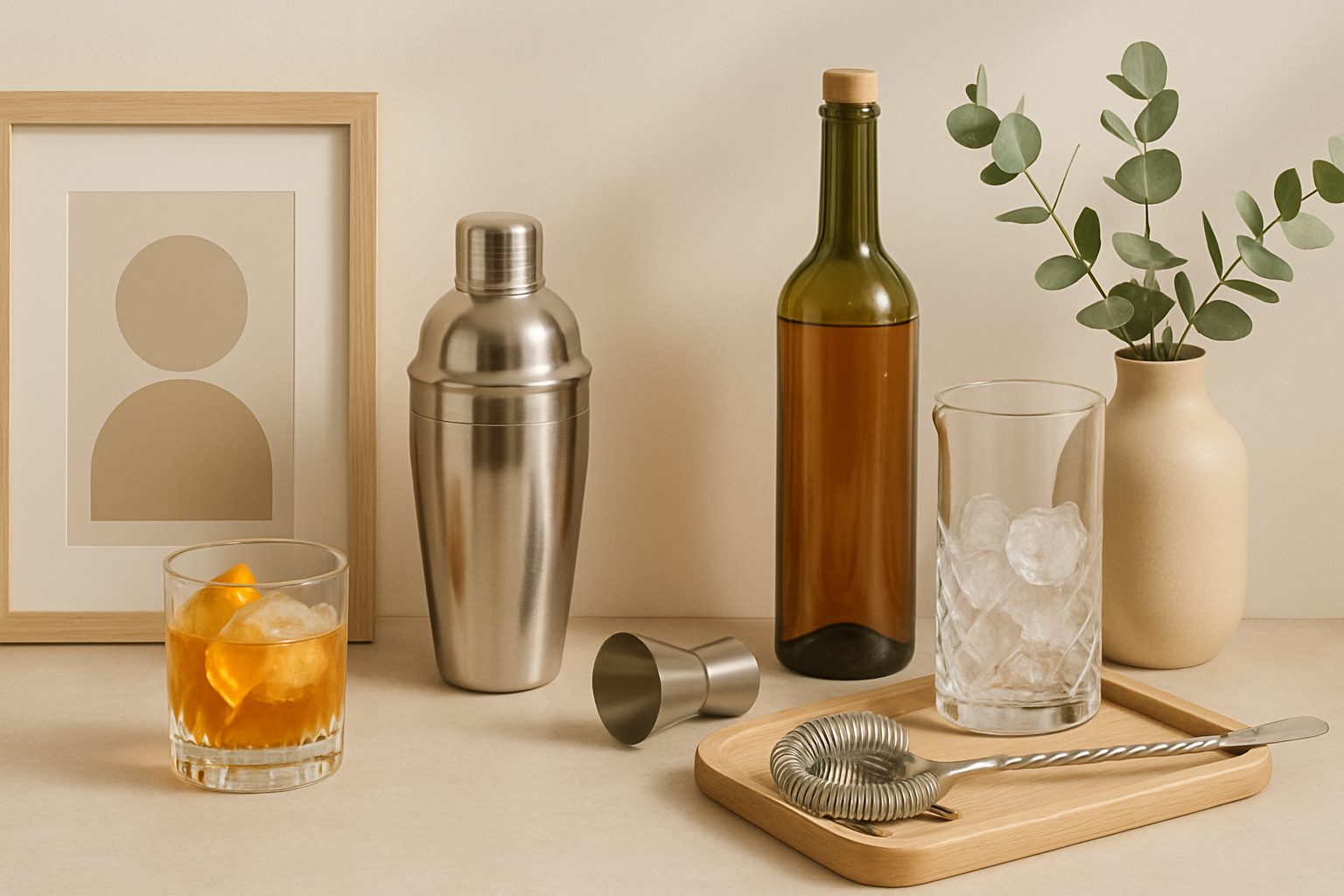
Modern glassware tends toward clarity and simplicity. Crystal coupes without heavy etching, generous rocks glasses in clean cylindrical shapes, and perhaps some contemporary Japanese-influenced pieces with subtle asymmetry. A minimalist stainless steel cocktail kit—shaker, bar spoon, strainer—looks purposeful without fussiness. Storage is often concealed; visible spirits are carefully curated for appearance rather than quantity. A few choice bottles displayed against a neutral backdrop is the modern approach.
Pros and Cons
Modern design feels timeless and adaptable. It works in small spaces, suits open-plan layouts, and requires less maintenance than glossier Art Deco pieces. The bar feels like a genuine tool for mixology rather than purely decorative. The risk is that minimalism done poorly feels cold or unfinished—a modern bar needs real intentionality. It also offers less visual forgiveness; sloppy organisation reads immediately in a clean space, whereas Art Deco's pattern and texture can mask disorder.
Art Deco vs Modern: Which Should You Choose?
Choose Art Deco if:
- You have a dedicated bar space—whether a corner alcove or a full room
- You love entertaining and want your bar to be a conversation piece
- You're drawn to visual richness and historical reference
- You don't mind spending more on statement pieces
- You prefer a "dressed up" atmosphere, even casually
Choose Modern if:
- Your home bar shares space with living or dining areas
- You prefer understated elegance and practicality
- You want flexibility to evolve your space over time
- You value easy maintenance and organisation
- You're building around quality spirits rather than visual display
The Hybrid Approach
Many UK homes do beautifully with a modern base—clean cabinetry, organised glassware—with selective Art Deco accents. A single statement mirror, a vintage Bakelite cocktail set, or a geometric-patterned shelf liner adds personality without overwhelming. This works particularly well if your home's existing interior doesn't commit fully to either aesthetic.
Making Your Decision
Your budget, available space, and how often you use the bar all matter. Art Deco requires more financial commitment but delivers immediate atmosphere. Modern rewards curation and patience as you build your collection. Neither style is objectively superior—the choice is genuinely about what you'll enjoy living with, and what suits both your home and your entertaining habits.
Start with one anchor piece: either a striking Art Deco cabinet or a clean modern bar cart. Everything else builds from there, and you'll quickly discover which direction feels right.
More options
- Cocktail Shaker & Bar Tool Sets (Amazon UK)
- Home Bar Cabinets & Bar Carts (Amazon UK)
- Under-Counter Bar Fridges & Wine Coolers (Amazon UK)
- Whisky Decanters & Cocktail Glassware Gift Sets (Amazon UK)
- LED Bottle Display Shelves & Bar Lighting (Amazon UK)